The New Tesla Roadster Explained: The Car That Started Tesla Is Back, and It Can Leave the Ground
Most cars are launched with a stage, a spotlight and a slow drive past the cameras. On 15 October 2026, Tesla’s new Roadster was launched off a ramp, flipped in mid-air, and landed.
At a SpaceX test site in McGregor, Texas, the long-awaited sports car drove upside down along a ramp, held in place by fans pulling it against the surface. It then used built-in thrusters to turn in the air, land, and even jump over a truck. It looked less like a car reveal and more like a scene from a science fiction film.
It also closed a story that began nearly two decades ago. The Roadster was the car that started Tesla. Its return, in a form that can briefly leave the ground, is one of the most unusual moments in the history of the automobile.
This guide explains what Tesla actually revealed, how the technology works, what is still unknown, and why a car very few people will ever own still matters to everyone else.
Where it all began
To understand why this car gets so much attention, you have to go back to 2008.
That year, a small company called Tesla started selling its first car: a two-seat electric sports car called the Roadster. At the time, most people thought of electric cars as slow, short-range and a little dull. The Roadster changed that impression. It could reach 60 mph (about 97 km/h) in around four seconds, as quick as many petrol sports cars, without using a drop of fuel.
Only about 2,450 were sold before production ended in 2012. But the Roadster did its job. It proved electric cars could be exciting, and it helped fund the company’s next step, the Model S. Almost every electric car on the road today owes something to that first experiment.
A promise made in 2017
In November 2017, Tesla surprised the world by rolling a new, second-generation Roadster out of the back of a truck. The promises were enormous: 0 to 60 mph in 1.9 seconds, around 620 miles (1,000 km) on one charge, a base price of $200,000, and deliveries starting in 2020.
2020 came and went. So did several other target dates. The car became one of the most famous delays in the industry, and for many reservation holders, a test of patience that lasted almost nine years.
What Tesla revealed
The new Roadster isn’t simply a faster version of the 2017 prototype. It has been redesigned as a lightweight hypercar built with magnesium, titanium and carbon fibre, styled more like Tesla’s angular Cybertruck than its everyday sedans. It has hidden headlights, a full-width rear light bar, a large rear wing, butterfly-style doors and a steering yoke.
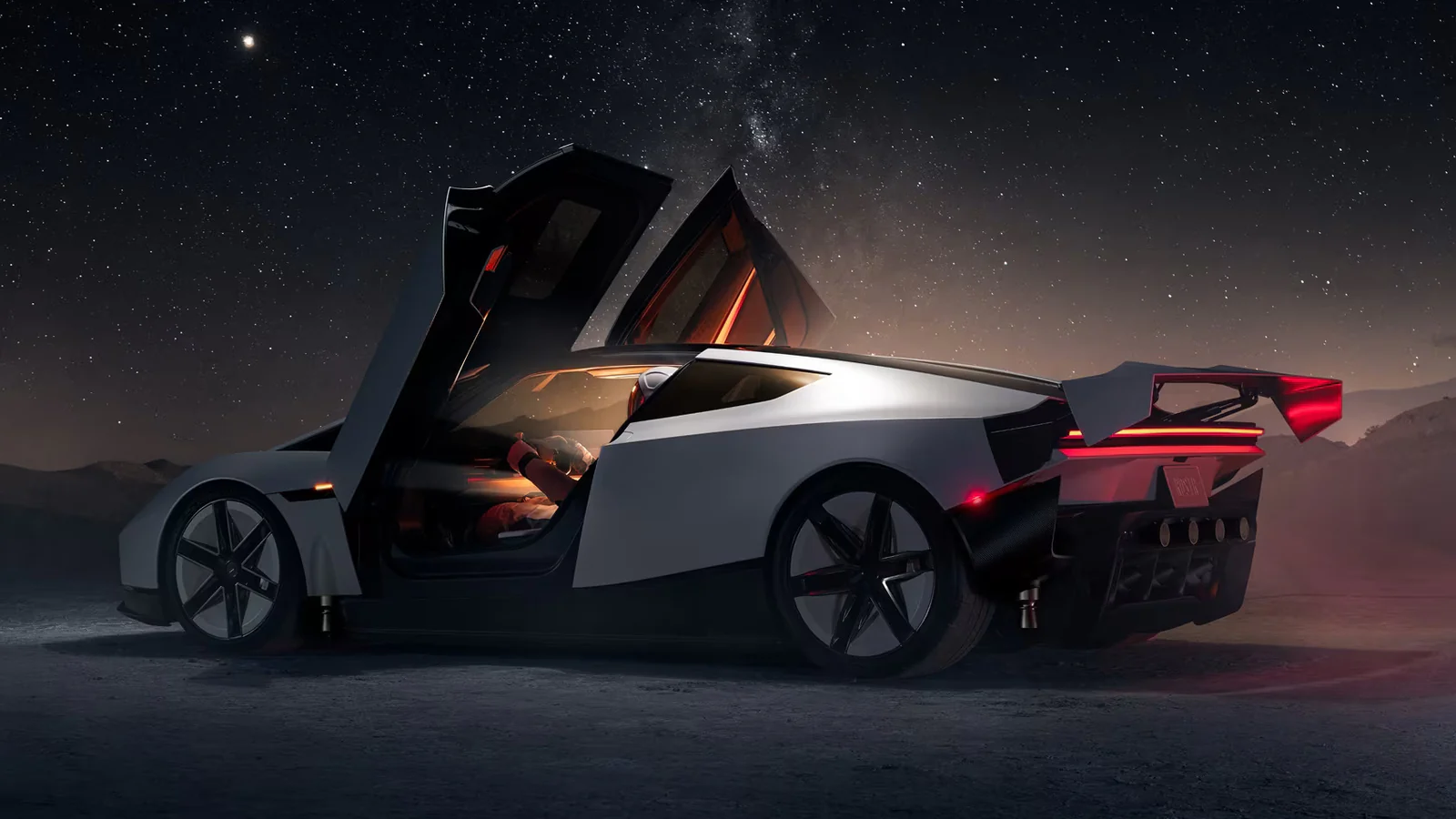 Image: Tesla
Instead of one model, Tesla described one car with two optional “augments” layered on top:
| Performance | Thrust | Rocket | |
|---|---|---|---|
| What it is | The road car | Adds rear thrusters | Adds a full flight system |
| Claimed 0–60 mph | Under 1.6 seconds | Under 0.9 seconds | Under 0.59 seconds |
| Seats | 2 | 2 | 1 |
| Availability | By reservation | Limited release | Invitation only |
| Road use | Designed for the road | Aimed at the track | Not approved for public roads |
Tesla also claims a top speed above 230 mph (about 370 km/h) for the Rocket version and a range above 300 miles (about 480 km) per charge. Production is targeted for 2028.
To put those acceleration numbers in perspective: the fastest production cars sold today take a little under two seconds to reach 60 mph. Under one second is a figure that, until now, belonged to drag-racing machines built for a straight strip of track.
How the technology works
Two ideas make this car different from anything else on sale. Both are easier to understand than they sound.
Fan suction: gluing the car to the road
A car can only accelerate, brake or corner as hard as its tyres can grip. Push harder than that, and the wheels simply spin or slide.
Race cars solve this with wings that push the car down at speed. The Roadster goes further. Fans underneath the car pull air out from below it, creating low pressure that sucks the whole car down onto the surface. That extra grip works even when the car is standing still, which is how Tesla says it could drive upside down along the ramp at the reveal.
The idea isn’t brand new. A Formula 1 team tried a “fan car” in the late 1970s, and it worked so well that it was withdrawn after winning its only race. What’s new is putting it into a car meant to be sold.
Cold-gas thrusters: borrowing from rockets
The more dramatic versions add thrusters developed with SpaceX, the rocket company also led by Elon Musk.
“Cold gas” means nothing burns. Tanks store gas under very high pressure, and when a valve opens, that gas rushes out of a nozzle and pushes the car in the opposite direction, the same way a balloon flies around a room when you let it go. SpaceX uses the same kind of system to turn its Falcon 9 rocket boosters around as they come back to land.
Here’s why that matters for speed: thrusters don’t depend on the tyres at all. Tesla claims they produce several times more push than the tyres could ever handle, which is how the Thrust and Rocket versions get past the normal limits of grip. On the Rocket version, extra thrusters around the car add upward and turning force, which is what allowed it to hop, twist in the air and land.
Why it matters beyond the headlines
It’s easy to dismiss a car like this as a toy for billionaires. Most people will never sit in one, let alone buy one. But extreme cars have always played a bigger role than their sales numbers suggest.
They prove what’s possible. The original Roadster changed what people believed an electric car could be. Within a decade, electric cars went from curiosities to a normal choice in showrooms around the world.
Technology trickles down. Features that start on expensive, low-volume cars often reach ordinary ones years later. Disc brakes, turbochargers, carbon-fibre parts and advanced driver aids all followed that path. Lighter materials, smarter aerodynamics and better control software developed for a hypercar can end up in the family car.
They push the whole industry. When one company sets a new benchmark, rivals respond. That competition is one reason electric cars keep getting faster, more efficient and more affordable.
They inspire. A car doing a mid-air flip gets people talking about engineering, physics and the future. For young people choosing what to study, moments like this matter more than any brochure.
What we still don’t know
The reveal answered some questions and raised many more. Here’s what remains open:
- The price. Tesla hasn’t announced a price for any version. In the United States, reserving a Performance car takes a $50,000 deposit, and the limited Thrust version takes $250,000. Those are deposits, not the final price, which will be set when buyers are invited to configure their cars. The Rocket version can’t be reserved at all.
- Delivery dates. Tesla is targeting production in 2028, but it hasn’t given firm delivery dates, and the program has a long history of slipping.
- The range trade-off. Over 300 miles is respectable, but it’s less than half the 620 miles promised in 2017. The car has also gone from four seats in the original plan to two at most.
- Flight in the real world. The Rocket version isn’t approved for public roads, and the FAA says the car doesn’t meet its definition of an aircraft, so it’s unclear who would regulate its flying. For now, the flying is a demonstration, not something an owner can do on the way home.
- Who it’s really for. Analysts are split. Some see it as a “halo car” that makes the whole Tesla brand more exciting. Others call it an engineering showcase with little commercial value. Elon Musk himself said in 2023 that it would be “a modest contributor to profitability.”
What it means for the rest of us
If you’re never going to buy a Roadster, here’s the honest takeaway: the car itself is not the point. The ideas inside it are.
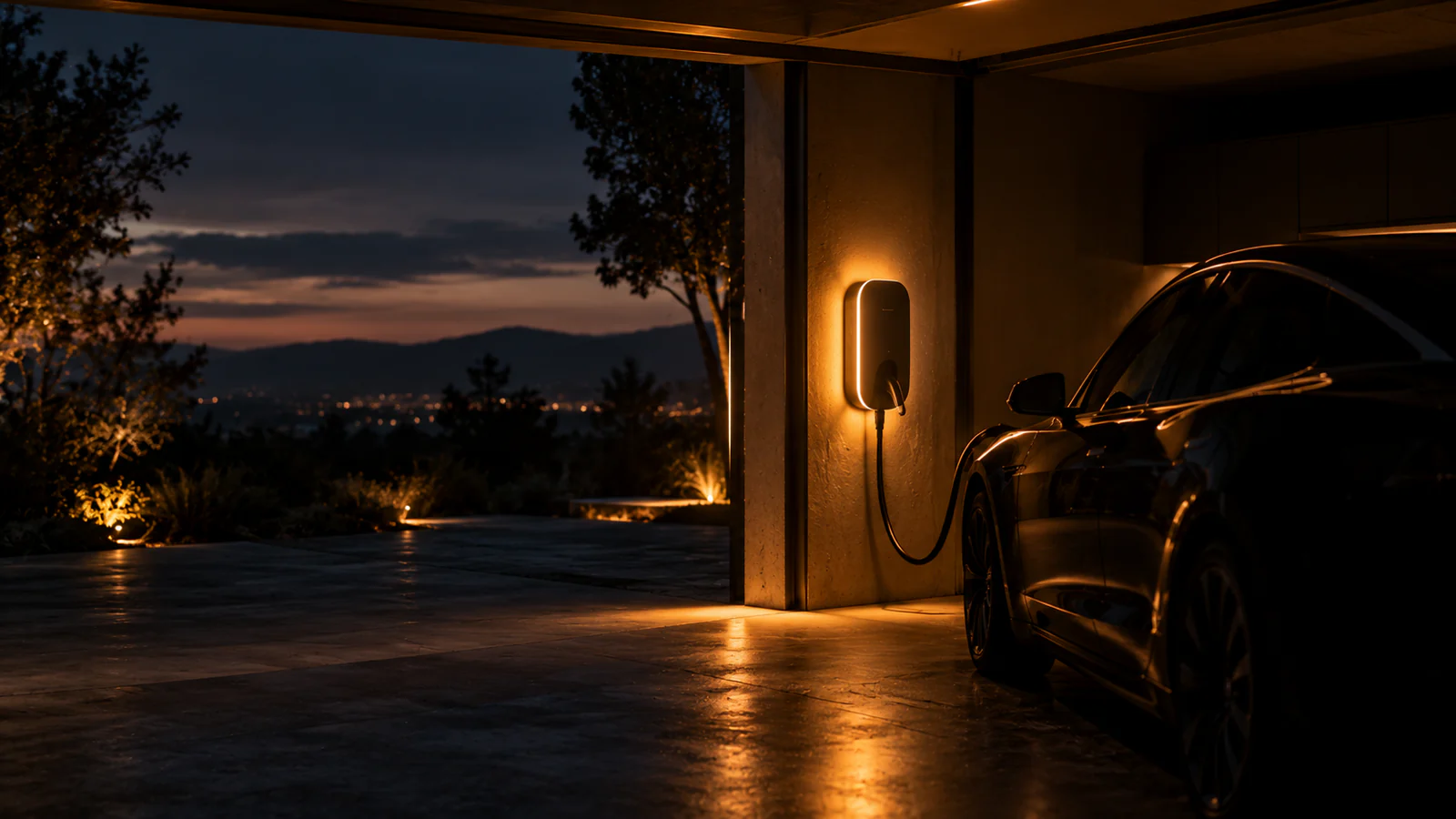
Twenty years ago, an electric sports car seemed unlikely. Today, millions of people around the world plug in their cars at night without a second thought. Somewhere in that journey, a small and very expensive Roadster helped change minds.
The new Roadster may play the same role for a different set of ideas: cars that manage air instead of just cutting through it, materials borrowed from spacecraft, and control systems precise enough to steer a machine through the air. Not all of those ideas will reach everyday cars. Some will. And the next time a family car feels a little lighter, grips a little better or goes a little further on a charge, a little of this strange, flying sports car may be inside it.
Specifications, deposits and timelines are based on Tesla’s announcements and published reporting as of October 2026. Tesla has not yet confirmed final prices or delivery dates, and details may change before production.
Common questions
Can the new Tesla Roadster really fly?
Only in a limited sense. The invitation-only Rocket version uses thrusters to hop, turn in the air and land, as shown at the reveal. It can’t fly like an aircraft, the FAA says it doesn’t meet its definition of one, and Tesla says it isn’t approved for public roads.
How much does the Tesla Roadster cost?
Tesla hasn’t announced a final price. In the United States, a reservation requires a $50,000 deposit for the Performance version and $250,000 for the limited Thrust version. In 2017, Tesla quoted a base price of $200,000, but that figure has not been confirmed for the new car.
When can you buy one?
Tesla is targeting production in 2028. Reservations are open in selected markets, but there are no confirmed delivery dates yet.
How fast is the new Roadster?
Tesla claims 0 to 60 mph in under 1.6 seconds for the Performance version, under 0.9 seconds for Thrust, and under 0.59 seconds for Rocket, with a top speed above 230 mph (about 370 km/h) for Rocket. These are Tesla’s claims and haven’t yet been independently tested.
Is the new Roadster street legal?
Tesla designed the Performance version for the road. The Thrust version is aimed at the track, and the Rocket version is not approved for public roads. Final approval will depend on the rules in each country where it’s sold.
What was the original Tesla Roadster?
It was Tesla’s first car, a two-seat electric sports car sold from 2008 to 2012. About 2,450 were built, and it helped prove that electric cars could be fast and desirable.
Sources
- Tesla, Roadster tesla.com
- Reuters (via Investing.com), Tesla's new Roadster turns in air with SpaceX thrusters, won't land until 2028 (15 October 2026) investing.com
- TechCrunch, Tesla reveals SpaceX-powered Roadster that flies and falls with style (15 October 2026) techcrunch.com
- Electrek, An updated technical look at Tesla's kick-flipping next-gen Roadster (15 October 2026) electrek.co
- CBS News, Tesla Roadster debut (the FAA on whether it is an aircraft) cbsnews.com
- TechCrunch, Tesla shareholders meeting: Musk on the Roadster (16 May 2023) techcrunch.com
- NBC News, New Tesla Roadster upstages rollout of electric big rig truck (2017) nbcnews.com
- Electrek, Rimac Nevera R records (10 July 2025) electrek.co
- Motor Sport Magazine, 1978 Swedish GP: Brabham fan car wins its one and only race motorsportmagazine.com